

Jojoba Oil for Sensitive Skin: Redness and Comfort
Jojoba oil is a popular choice in routines for sensitive skin, especially among people who deal with redness and discomfort. Its makeup, close to human sebum, and its soft texture explain why it appeals to reactive skin. This guide covers what sensitive skin needs, why jojoba oil is often chosen, common causes of redness, how to apply it and what to realistically expect.
Understanding what sensitive skin needs

Sensitive skin reacts easily to its environment and to changes in routine, so the products you choose matter.
Reactive by nature
Sensitive skin is often linked to a weakened skin barrier, which makes it more prone to tightness, stinging and redness. It can react to small triggers such as temperature changes or certain cosmetic ingredients.
A weakened skin barrier
When the barrier is compromised, skin loses water more easily and feels uncomfortable. This fragility can make redness more likely and increase sensitivity to products.
Reacting to the environment
Pollution, wind, sun or friction can all trigger visible reactions. Sensitive skin generally does best with gentle, stable, non-irritating products.
Moisture matters
Sensitive skin is often dehydrated, which can make it feel even more reactive. A routine focused on comfort and protection is the usual starting point.
Why jojoba oil is chosen for redness-prone skin

Jojoba oil has several characteristics that make it a frequent pick for reactive skin routines.
A makeup similar to sebum
Jojoba is technically a liquid wax made of wax esters, a structure often compared to human sebum. It spreads easily and feels light on the skin.
Suitable for many skin types
Its light, non-greasy feel means people with both dry and combination skin use it.
Emollient comfort
As an emollient, it softens the feel of the skin and can ease the sensation of tightness that often comes with dryness.
A light protective film
The oil leaves a thin layer on the skin's surface, which helps limit the dry, tight feeling caused by wind or cold air.
Common causes of redness and irritation

Redness has many possible causes. Persistent redness, flushing, burning or bumps can be signs of a skin condition such as rosacea or eczema, which should be assessed by a dermatologist.
Dehydration
Dehydrated skin can feel thinner and more reactive. Keeping it comfortable with gentle products is a sensible first step.
After irritation
After a reaction, skin may stay red for a while. A simple, gentle routine avoids adding further irritation.
Weather changes
Cold, wind or heat can cause sudden redness. A light layer of oil can make skin feel more comfortable in harsh weather.
Unsuitable products
Harsh products can upset sensitive skin. Simplifying your routine is often the most effective thing to do.
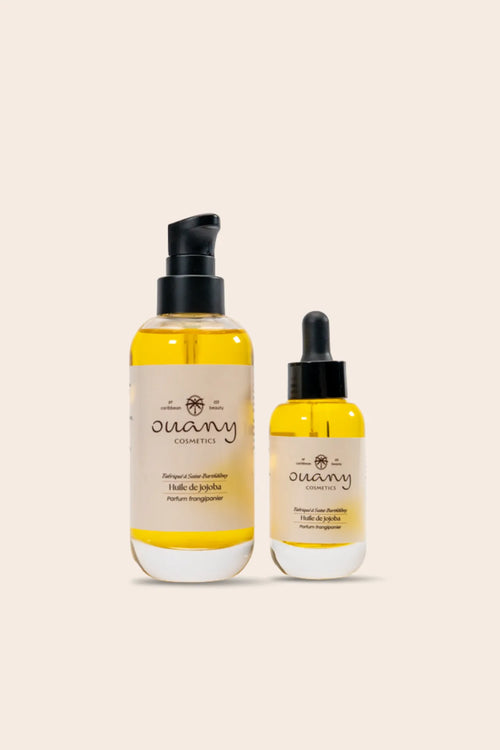
Our Ouany products
Available at our points of sale in St Barts and at our partner hotels, spas and villas.


How to apply it

Regular, gentle use is the key with sensitive skin.
Daily use
A few drops are enough to gently massage the face. Simple and quick, this step leaves skin feeling soft.
Gentle massage
Use light movements and avoid rubbing. Gentle touch is kinder to sensitive areas.
Pairing with other products
Jojoba oil fits into a minimalist routine or alongside gentle, non-irritating moisturizers.
How often
Morning and evening is a common rhythm, but sensitive skin may prefer once a day. Adjust to how your skin feels.
What to expect

Every skin is different, and a new routine takes time to evaluate.
More comfort
The most common feedback is skin that feels softer and less tight.
A gentler routine
Swapping harsh products for a simple oil-based step often makes a routine easier for sensitive skin to tolerate.
Protection from the elements
A light layer of oil can make skin feel more comfortable on windy or cold days.
When redness persists
If redness doesn't improve or keeps coming back, see a dermatologist rather than adding more products.
Precautions and good practice

Jojoba oil for sensitive skin works best as part of a well-thought-out routine, with a few precautions.
Patch test first
Try it on a small area to check how your skin reacts, especially if it is very reactive.
Choose a quality oil
Look for a pure, cold-pressed oil. Unrefined oils keep more of the plant's natural components.
Keep the routine gentle
Harsh products can weaken sensitive skin. A routine built around gentleness is more comfortable.
Daily protection
Protecting your skin from sun and harsh weather helps keep it comfortable.
Jojoba oil is a gentle, light option for people with sensitive skin who want a simple routine. Used regularly and with care, it keeps skin feeling comfortable, while persistent redness is a reason to see a dermatologist.
FAQ
Is jojoba oil good for sensitive skin?
Many people with sensitive skin like its light, gentle texture. Tolerance is individual, so patch test first.
Can I use it on very reactive skin?
Yes, after a patch test. If your skin reacts to many products, ask a dermatologist for advice.
How long before I notice a difference?
Give any new routine a few weeks before judging it. Redness that persists should be checked by a dermatologist.
Can I combine it with a moisturizer?
Yes, it pairs well with a gentle cream for extra comfort.
Is it suitable for sensitive combination skin?
Its light texture makes it a common choice for combination skin too.
Read next
Read more

Jojoba oil is a popular massage oil for healed scars thanks to its sebum-like makeup. This guide explains how people use it, the precautions to take and why a dermatologist is the right person to a...

Jojoba oil is often mentioned for acne-prone skin because of its light, sebum-like makeup. This guide explains the basics of acne, how to test the oil safely and why a dermatologist should guide tr...