

Jojoba Oil for Acne-Prone Skin: What to Know
Jojoba oil is often mentioned in routines for acne-prone skin. Its makeup, close to human sebum, its stability and its light feel explain why people with blemish-prone skin are curious about it. This guide explains the basics of acne, why jojoba oil comes up so often, how to use it and what to realistically expect. Acne is a skin condition, so a dermatologist remains the right person to diagnose and treat it.
Understanding acne

Several mechanisms are involved in breakouts, and knowing them helps you choose products that won't make things worse.
Excess sebum
Acne often develops when skin produces too much sebum. The excess can clog pores and create conditions in which blemishes form.
Inflammation
Breakouts often come with inflammation, which makes skin red, tender and uncomfortable.
A weakened skin barrier
When the skin barrier is compromised, skin becomes more vulnerable to irritation. Harsh routines can make this worse.
Clogged pores
Blocked pores trap debris, leading to blackheads and spots. Gentle, consistent cleansing is part of most routines for acne-prone skin.
Why jojoba oil comes up for acne-prone skin

People with oily or blemish-prone skin are often wary of oils. Jojoba oil stands out for a few reasons.
A makeup similar to sebum
Jojoba is technically a liquid wax made of wax esters, a structure often compared to human sebum. It feels light and absorbs without a heavy, greasy film.
A light texture
Its fluid texture makes it easier to use on oily or combination skin than heavier oils.
Emollient comfort
Acne treatments can leave skin dry and tight. As an emollient, jojoba oil is sometimes used to bring back a feeling of comfort, as long as your dermatologist agrees.
A light protective film
The oil leaves a thin layer on the skin's surface that can limit the dry, tight feeling caused by wind or cold.
Different types of acne

Acne comes in several forms. Each calls for a different approach, which is why a professional diagnosis matters.
Inflammatory acne
Red, tender spots need careful handling. Avoid harsh products, and see a dermatologist if breakouts are painful or widespread.
Comedonal acne
Blackheads and small bumps are linked to clogged pores. Gentle cleansing and non-comedogenic products are the usual basics.
Hormonal acne
Hormonal fluctuations can trigger breakouts. This type often needs medical follow-up, so talk to a doctor or dermatologist.
Adult acne
Persistent breakouts in adulthood call for a gentle, stable routine and, often, professional advice.
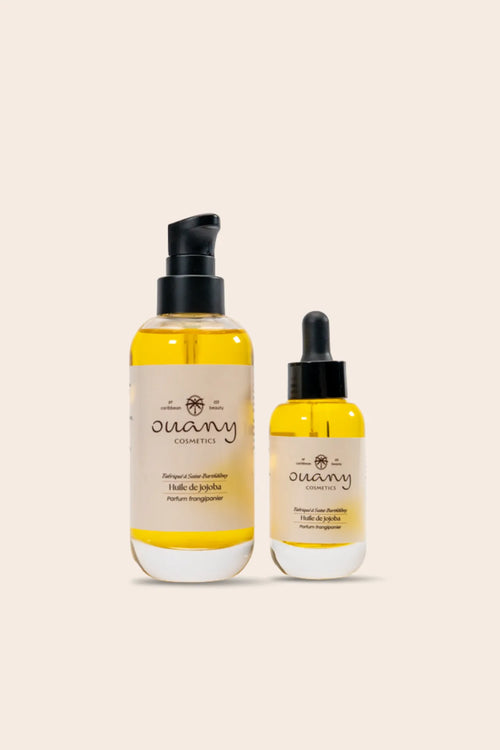
Our Ouany products
Available at our points of sale in St Barts and at our partner hotels, spas and villas.


How to apply it

If you decide to try jojoba oil, go slowly and keep the rest of your routine simple.
Daily use
One or two drops are enough to gently press onto the face. Start with a small amount to see how your skin responds.
Gentle touch
Use light movements and never rub or squeeze blemishes.
Pairing with other products
Jojoba oil can fit into a minimalist routine alongside gentle, non-comedogenic products. If you are under treatment, check with your dermatologist before adding anything.
How often
Once a day, often in the evening, is a reasonable start. Adjust to how your skin feels.
What to expect

Every skin reacts differently, and an oil is not an acne treatment.
Comfort
The most common feedback is skin that feels softer and less tight, especially when acne treatments are drying.
A gentler routine
Replacing harsh, stripping products with gentler steps is often easier on irritated skin.
Watch for new breakouts
If you notice more blemishes after introducing the oil, stop using it.
When to see a professional
Persistent, painful or scarring acne needs a dermatologist, who can recommend treatments suited to your skin.
Precautions and good practice

A few simple rules help you test jojoba oil safely on blemish-prone skin.
Patch test first
Try it on a small area for a few days to check how your skin reacts.
Choose a quality oil
Look for a pure, cold-pressed oil. Unrefined oils keep more of the plant's natural components.
Keep the routine gentle
Harsh products can weaken the skin barrier. A routine built around gentleness is more comfortable.
Daily protection
Protecting your skin from the sun matters, especially if you use acne treatments that make skin more sensitive.
The bottom line
Jojoba oil is a light, gentle oil that many people with acne-prone skin are curious about. It can bring comfort to a simple routine, but it does not replace a diagnosis or treatment. For persistent breakouts, a dermatologist is your best ally.
FAQ
Does jojoba oil work for acne?
It is not an acne treatment. Some people with blemish-prone skin like its light texture for comfort, but acne should be managed with a dermatologist.
Can I use it on oily skin?
Its light feel makes it one of the oils people with oily skin are most willing to try. Start with a small amount and stop if you notice new breakouts.
How long before I notice a difference?
Give any change in routine a few weeks before judging it, and see a dermatologist if acne persists.
Can I combine it with a non-comedogenic cream?
Yes, it can be used with a gentle cream. If you are under treatment, ask your dermatologist first.
Is it suitable for combination skin?
Many people with combination skin use it, sometimes only on drier areas.
Read next
Read more

Jojoba oil is a frequent pick for sensitive skin thanks to its light, gentle texture. This guide covers what reactive skin needs, how to apply the oil and when redness calls for a dermatologist.

Jojoba oil is a light, stable oil that many people add to their anti-aging routine. This guide explains how skin ages, how to use the oil on the face and what you can realistically expect.