

Organic vs Non-Organic Jojoba Oil: Key Differences
Organic or non-organic jojoba oil: what's the difference? It's a common question for anyone who wants to add this plant oil to their skincare routine. Jojoba oil is a classic in body and hair care, but not every bottle is the same. Some oils are certified organic, others come from conventional crops, and each type differs in how the plant is grown and how the oil is extracted. Here's how they compare on composition, everyday use and the points to check before you choose.
Organic vs non-organic jojoba oil in skincare

Where the two types of oil come from
Non-organic jojoba oil comes from conventional crops, while organic oil comes from certified plantations that follow strict farming standards. Producers offer both versions to meet different expectations: naturalness, purity or stability.
What each type aims for
Non-organic oils are designed for a stable texture and a long shelf life. Organic oils aim to stay close to the plant, with minimal processing and methods that respect the environment.
How the plants are grown and harvested
Organic farming excludes synthetic chemical pesticides and favors natural methods. Conventional farming may use treatments to increase yields.
Organic vs non-organic jojoba oil: composition and processing

Refined or unrefined
Organic oil is often sold unrefined, with minimal processing. Non-organic oil may be lightly refined to give it a more uniform texture.
Extraction methods
Organic oils are often cold-pressed. Non-organic oils may go through more technical processes designed to improve stability.
Possible additives
Non-organic oil may contain traces of added preservatives or antioxidants. Organic oil favors natural alternatives or nothing added at all.
How the products are positioned
Organic labels highlight naturalness, transparency and the quality of the plant. Conventional products focus on stability, texture and ease of use.
Organic vs non-organic jojoba oil: how they're used

Same everyday uses
Both versions are used in the same ways: a few drops on the face, body or hair, alone or as part of a routine. Organic oil often has a rawer, more natural feel. Keep in mind that the organic label tells you how the plant was grown, not what result to expect on your skin.
Sensitive skin
People with sensitive skin often prefer products with minimal processing and nothing added, which is more common with organic oils. Non-organic oil may suit those who want a more neutral texture. If your skin reacts easily, ask a dermatologist for advice.
Face, body and hair
Both oils can be used on the face, body or hair. Organic oil is often the pick for natural or minimalist routines.
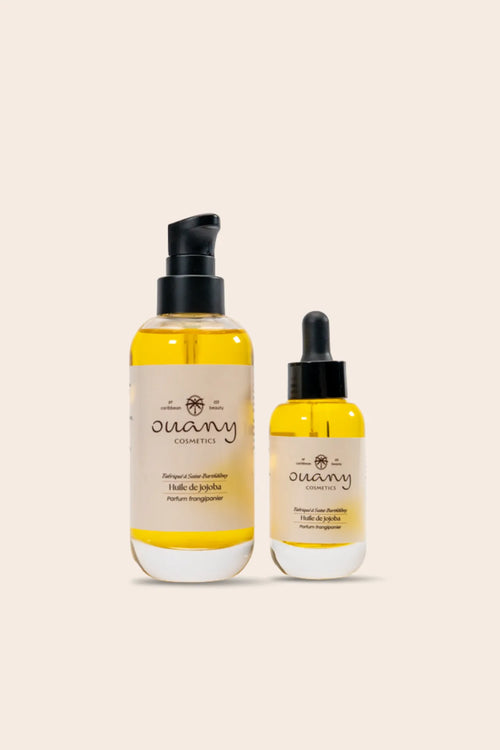
Our Ouany products
Available at our points of sale in St Barts and at our partner hotels, spas and villas.


Organic vs non-organic jojoba oil: precautions

Do a patch test on sensitive skin
Jojoba oil is generally well tolerated, but testing a small area first is still a good idea to see how your skin reacts, especially if it's very reactive. On irritated or damaged skin, or if you have a skin condition, check with a dermatologist first.
Choose according to the area
Organic oil may be preferred for the face or delicate areas. Non-organic oil can work for broader use.
How often to use it
Both versions can be used daily, depending on how your skin feels.
Organic vs non-organic jojoba oil: how to choose

How close to the plant you want it
If you want an oil that stays close to the plant, look for an organic, cold-pressed, unrefined oil. If you prefer a more neutral texture, a non-organic oil can work. On St Barts, Ouany jojoba oil comes in 30 ml and 100 ml glass bottles, available at retail locations on the island and at our partner hotels, spas and villas.
Ingredients
Every ingredient should be clearly listed. Transparent brands publish their full formulas so you can pick a product that suits you.
Texture and scent
Organic oil is often more natural-smelling, with no added fragrance. Non-organic oil may be lightly refined and more neutral.
Going further with jojoba oil
So, organic or non-organic jojoba oil? The answer depends on what you're looking for: naturalness, purity, texture or tolerance. Producers keep developing fresher, more natural or more stable oils, so you can adapt your routine to your skin.
FAQ
Is organic jojoba oil better?
It's often less processed. But "organic" describes how the plant was grown, not a result on the skin: the way the oil is extracted and stored matters just as much.
Does non-organic oil contain controversial ingredients?
Some oils may contain traces of preservatives, but it depends on the brand. Reading the ingredient list is the best way to know.
Is organic oil suitable for sensitive skin?
Many people with sensitive skin prefer it because it's minimally processed. A patch test is still recommended, and a dermatologist can advise you if your skin reacts often.
Can you use both versions on your hair?
Yes, both can be used on the hair, usually a few drops on the lengths and ends.
Does organic oil have a different texture?
Often, yes: it tends to be less refined and closer to the plant, with no added fragrance.
Read next
Read more

Shampoo cleans the scalp, while conditioner works on the lengths. This guide explains how each one works, the most common mistakes and how to choose both for your hair type. You'll also find a simp...

A gentle shampoo cleans with mild surfactants designed to respect the scalp. It's a popular choice for sensitive scalps, frequent washing, color-treated hair and curls. Here's how it works, what's ...