

How to Fix Cracked Heels: Causes, Care and Tips
To fix cracked heels, moisturize at least twice a day with a thick cream, ideally one containing 10% to 25% urea, then apply an occlusive balm at night under socks. These dermatologist-recommended steps are enough in most cases. If the cracks bleed, turn red, last longer than a week, or if you have diabetes, see a doctor or a podiatrist.
Key takeaways
- The American Academy of Dermatology recommends a cream with 10% to 25% urea, alpha hydroxy acid or salicylic acid, applied within 5 minutes of bathing.
- According to DermNet, dry, thickened skin around the rim of the heel is the very first step toward cracking.
- A 25% urea cream improved pain, dryness and scaling of heel fissures after four weeks, according to a clinical review cited by bpacnz.
- Mayo Clinic advises moisturizing your heels at least twice a day and using skin-softening exfoliants no more than twice a day.
- Cracks that do not improve after a week of self-care call for a podiatrist, according to DermNet.
- For people with diabetes, France's National Authority for Health (HAS) recommends moisturizing dry foot skin with emollients, except between the toes.
Contents
- Why do you get cracked heels?
- What ingredients help repair cracked heels?
- How do you treat cracked heels at home?
- Why do heels crack in the Caribbean sun too?
- When should you see a doctor for cracked heels?
- Our tips for soft heels all year round
- FAQ
Why do you get cracked heels?
Cracked heels happen when dry, thickened skin loses its flexibility and splits under your body weight. Dry skin is the main cause. Standing for long hours, open-back shoes, walking barefoot and some medical conditions, such as diabetes or psoriasis, make the problem worse.

How does a heel crack form?
A crack, or fissure, is a split in the skin that can become deep and painful. On the heel, it starts with a callus: an area of hard, dry, thickened skin around the rim of the heel, often yellowish or brownish. Dermatologists call this hyperkeratosis, meaning a thickening of the outer layer of the skin.
According to DermNet, with every step, the fat pad under your heel is compressed and spreads sideways. The callus is too stiff to follow that movement, so it eventually splits. bpacnz adds that these fissures usually appear at the back of the heel and generally affect both feet.
What makes heels more likely to crack?
Several everyday factors raise the risk:
- naturally dry skin, or skin dried out by long, hot showers;
- standing for long periods, especially on hard floors;
- excess weight, which adds pressure on the heel's fat pad;
- sandals, flip-flops and open-back shoes, which don't hold that fat pad in place;
- walking barefoot;
- cold, dry winter weather.
A dermatologist with the American Academy of Dermatology lists cold, dry weather, walking barefoot and long, hot showers among the common reasons.
Which medical conditions can be involved?
Sometimes dry skin isn't the whole story. DermNet lists atopic dermatitis, psoriasis (especially palmoplantar psoriasis), palmoplantar keratoderma, diabetes and hypothyroidism among the conditions that predispose people to cracked heels. If your cracks come with red patches, itching or other skin changes, a dermatologist can identify the cause and suggest the right treatment.
What ingredients help repair cracked heels?
To repair cracked heels, dermatologists favor creams that both hydrate and gently exfoliate: urea, alpha hydroxy acids (AHAs) or salicylic acid. Occlusive products, such as petroleum jelly or a rich oil-based cream, complete the routine at night by sealing water into the skin.

What does urea do for thick skin?
Urea is both a humectant, meaning it holds water in the skin, and a keratolytic, meaning it helps loosen built-up dead skin cells. That double action explains its central role in heel care, as both DermNet and bpacnz point out.
bpacnz notes that 10% urea cream is the most commonly used, and that a higher level, around 25%, may be needed for severe fissures. The American Academy of Dermatology recommends a range of 10% to 25%.
On the evidence side, bpacnz cites a clinical review reporting that a 25% urea cream improves pain, dryness, skin appearance and scaling after four weeks in people with heel fissures. One caution: urea can sting when applied to raw, broken skin.
Salicylic acid or AHAs: what's the difference?
Salicylic acid is a keratolytic exfoliant. According to bpacnz, a 6% cream applied to the heels reduced hyperkeratosis, fissures and pain. It goes on the thickened skin, not into open cracks, where it stings.
Alpha hydroxy acids (AHAs) include glycolic, citric and lactic acids, originally found in milk, fruit and sugar cane. They help exfoliate the skin gently. Mayo Clinic notes that these skin-softening agents may cause slight irritation and recommends applying them no more than twice a day.
| Ingredient | Main role | What the sources say | Caution |
|---|---|---|---|
| Urea 10% | Hydrates and softens | Most commonly used strength (bpacnz) | May sting on raw skin |
| Urea 25% | Exfoliates thick calluses | For severe fissures (bpacnz) | Avoid open cracks |
| Salicylic acid | Keratolytic exfoliant | 6% cream studied on heels (bpacnz) | Thickened skin only |
| AHAs (lactic, glycolic) | Gentle exfoliation | Listed by the AAD and Mayo Clinic | No more than twice a day (Mayo Clinic) |
| Petroleum jelly | Occlusive layer | At night, under socks (AAD) | Greasy texture |
| Rich oil-based cream | Nourishes and protects | On damp skin at night (Mayo Clinic) | Doesn't exfoliate calluses |
What about plant oils like jojoba?
Jojoba oil is a special case. A 2021 review in the journal Polymers explains that it is made up of almost 98% waxes, mainly wax esters, which is why it is often called a "liquid wax" rather than an oil. A 2013 review of jojoba in dermatology highlights its use in moisturizing formulas and reports data suggesting an anti-inflammatory effect.
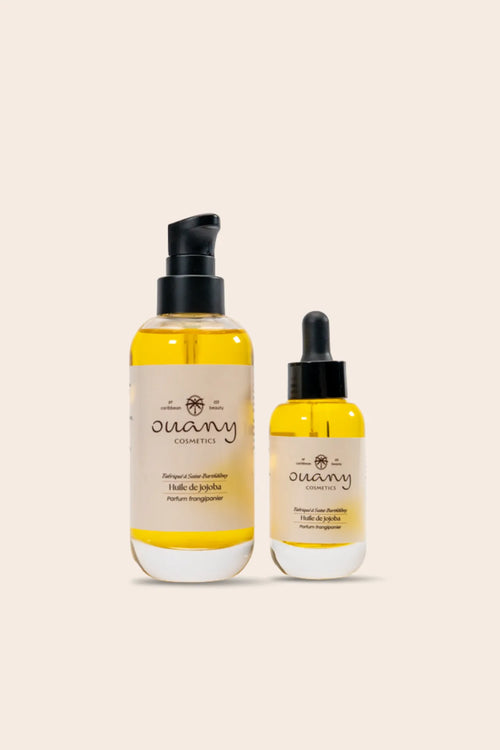
The sources we reviewed don't present plant oils as a substitute for keratolytic ingredients when calluses are thick. They fit best into the nighttime step: Mayo Clinic recommends a heavy, oil-based cream or petroleum jelly applied to damp skin. Ouany jojoba oil comes in 30 ml and 100 ml glass bottles.
How do you treat cracked heels at home?
To treat cracked heels at home, keep showers short, moisturize within five minutes with a suitable cream, gently buff softened calluses and apply a thick product at night under cotton socks. At the first sign of cracking, DermNet says moisturizing two to three times a day may be all you need.

What routine should you follow morning and night?
Consistency makes all the difference. Here is a routine based on recommendations from the American Academy of Dermatology and Mayo Clinic:
- In the shower: keep it to 5 to 10 minutes and use a gentle, fragrance-free cleanser to help your feet keep their natural oils.
- Right after: pat your skin dry without rubbing, then apply your heel cream within 5 minutes, while the skin is still slightly damp.
- During the day: reapply whenever your heels feel dry, sticking to twice a day for exfoliating products.
- In the evening: soak your feet for about 10 minutes in warm water, pat dry, then gently rub your heels with a loofah or pumice stone.
- Before bed: apply a layer of petroleum jelly or rich cream, then put on cotton socks to keep the product on your skin.
Should you file down heel calluses?
Yes, but gently. DermNet suggests rubbing a pumice stone lightly over the callus before moisturizing to remove some of the hard skin. bpacnz adds that pumice works best on skin already softened by a keratolytic cream.
Never cut calluses yourself with scissors or a razor blade. Both sources warn against it because of the risk of injury and infection. Removing thick calluses is a job for a professional.
How do you protect a painful crack?
For a painful fissure, the AAD suggests applying a liquid bandage during the day to create a protective barrier. According to bpacnz, liquid, gel or spray bandages reduce pain and help healing. Keep exfoliating creams out of the crack itself.
Our Ouany products
Available at our points of sale in St Barts and at our partner hotels, spas and villas.


Why do heels crack in the Caribbean sun too?
In the Caribbean sun, heels mostly suffer from summer habits: flip-flops, open sandals, walking barefoot on sand and frequent showers after the beach. These factors, all cited by dermatologists, matter as much as winter cold. Cracked heels aren't just a cold-weather problem.

Flip-flops, sand and showers: the vacation trio
The American Academy of Dermatology advises people with dry, cracked heels to avoid open-heeled shoes such as flip-flops. DermNet explains why: with no heel support, nothing holds the fat pad in place, so it spreads further with every step and stretches the skin.
Walking barefoot, a risk factor listed by bpacnz, is part of daily life by the sea. After rinsing off salt and sand, moisturize your heels, just as you would in winter.
Ouany's view from St Barts
Ouany was born on St Barts, where people spend much of the year in sandals, between the beach and town.
Our Caribbean-inspired products are made with more than 95% ingredients of natural origin and come in glass bottles. The coconut vanilla body lotion and the jojoba oil are available in 30 ml and 100 ml. You'll find them at retail locations on St Barts and at our partner hotels, spas and villas.
When calluses are thick or cracked, a dedicated urea cream remains the go-to option described by dermatologists. Our products are part of a broader body care routine, not a replacement for it.
When should you see a doctor for cracked heels?
See a doctor, dermatologist or podiatrist if your cracks bleed, become red, warm or painful, or don't improve after a week of self-care. People with diabetes should have any crack checked right away, because it can turn into a foot wound that is hard to heal.

Which signs should worry you?
Most of the time, cracked heels are simply uncomfortable. But DermNet warns that deep fissures can bleed, make walking painful and become infected. Infection can then lead to cellulitis, an infection of the skin and underlying tissue that requires medical treatment.
Spreading redness, warmth, swelling, discharge or increasing pain are all reasons to get medical advice quickly.
Why does diabetes change everything?
In people with diabetes, nerve damage can reduce feeling in the feet. A crack can go unnoticed and, according to DermNet, may lead to a diabetic foot ulcer.
In June 2025, France's National Authority for Health (HAS) published a guidance sheet on preventing at-risk feet. Its key messages for patients include:
- check the entire surface of your feet every day, including between the toes;
- wash your feet daily in water below 37 °C (98.6 °F) with a pH-balanced soap, then dry them thoroughly;
- moisturize dry skin with emollients, except between the toes;
- avoid walking barefoot;
- don't use metal files or chemical products to remove calluses, and leave that care to a podiatrist.
If this applies to you, talk to your doctor or podiatrist about your heels before choosing a product.
Our tips for soft heels all year round
To keep your heels soft all year, focus on consistency rather than occasional intensive treatments: daily moisturizing, closed, well-fitting shoes, short showers and regular foot checks. According to DermNet, prevention is the best treatment for cracked heels, before cracks even appear.

Everyday habits
- Moisturize your heels every day, even when they look fine.
- Choose shoes with a closed back in the right size, and replace worn-out pairs.
- Save flip-flops for the beach and the pool.
- Keep showers short, between 5 and 10 minutes.
- Buff calluses gently once softened, and never cut them.
- Check your feet regularly to catch the first cracks.
Taking your routine on vacation
On vacation, 30 ml sizes slip easily into a travel kit. The Ouany discovery set brings together three products in that size: jojoba oil, body lotion and after-sun gel.
FAQ
How long does it take to heal cracked heels?
Early cracks often improve within days. DermNet says moisturizing two to three times a day may be enough at the first sign of cracking. In a review cited by bpacnz, a 25% urea cream showed improvement after four weeks. If you see no progress after a week of self-care, see a podiatrist.
Can you use a foot file on cracked heels?
A pumice stone used gently on softened skin is fine, according to DermNet. Avoid blades and scissors, which risk injury and infection. For people with diabetes, France's National Authority for Health also advises against metal files and recommends leaving calluses to a podiatrist.
Is a plant oil enough for cracked heels?
Not always. Dermatology sources first recommend a cream containing urea, AHAs or salicylic acid when calluses are thick. A rich oil-based cream or petroleum jelly works as a nighttime add-on, applied to damp skin under socks, as Mayo Clinic suggests.
Should you wear socks to bed for cracked heels?
Yes, it's a recommended step. The American Academy of Dermatology and Mayo Clinic suggest applying a thick product or petroleum jelly before bed, then putting on socks, cotton ones according to Mayo Clinic. They keep the product on your skin overnight and protect your sheets.
Are cracked heels dangerous?
Usually not: they are mostly uncomfortable. Deep fissures can bleed and become infected, sometimes leading to cellulitis, according to DermNet. In people with diabetes, a crack can develop into a foot ulcer. Redness, warmth or increasing pain are reasons to see a doctor promptly.
Sources
- American Academy of Dermatology – How to care for dry, cracked heels
- American Academy of Dermatology – How to care for dry, cracked heels (press release)
- DermNet – Cracked heel
- bpacnz – Cracked heels: stop them in their tracks
- Mayo Clinic – How to heal cracked heels
- Haute Autorité de santé – Parcours de soins du patient adulte vivant avec un diabète de type 2 : prévention du pied à risque (in French)
- Polymers (2021) – Jojoba Oil: An Updated Comprehensive Review on Chemistry, Pharmaceutical Uses, and Toxicity
- PubMed – Jojoba in dermatology: a succinct review
Photos: Ouany; Louisa Potter, Kylie Anderson and Livi Po on Unsplash.
Read next
- Fragrance Allergens in Cosmetics: What Changed in 2026
- Is Tea Tree Oil Banned in the EU? What's Changing
- How to Get Rid of Under-Eye Bags: Causes and Tips
- Does Salt Water Help Acne? The Truth About Sea Swims
- Spicules Skincare: The Natural Microneedling Alternative
- When Does Skin Become Mature? Signs and Care
Read more

The frangipani you see in St Barts is a small tropical tree of the genus Plumeria. White-flowered Plumeria alba is native to the Lesser Antilles, while the colorful garden frangipanis mostly descen...

Since July 31, 2026, 56 new fragrance allergens must be named individually on EU cosmetic labels when they exceed 0.001% in leave-on products or 0.01% in rinse-off products. Products placed on the ...