

Jojoba Oil Benefits: What We Really Know
Jojoba oil benefits get talked about a lot, because this plant oil has a composition unlike most other oils. Its structure is often compared to human sebum, it is remarkably stable, and it shows up in skin, hair and massage products alike. That popularity has also produced plenty of big promises. Here is a measured look at what jojoba oil is, how people use it on skin and hair, and where it's wiser to stay cautious.
1. A rare composition

A structure often compared to sebum
Jojoba oil stands apart from classic plant oils. It is made mostly of wax esters, a type of compound also found in human sebum. This is why it is so often described as "skin-like" and why many people find it absorbs without feeling heavy.
Natural stability
Unlike most plant oils, jojoba oil goes rancid very slowly. Its resistance to oxidation comes from its waxy structure. In practice, this means a well-stored bottle keeps for a long time.
Its main components
Jojoba oil contains fatty acids, along with tocopherols (natural forms of vitamin E). These components are a big part of why it is used so widely in cosmetic formulas.
2. Jojoba oil and skin comfort

An oil, not a source of water
Like any oil, jojoba doesn't bring water to the skin. It is usually applied on slightly damp skin or over a moisturizer, as the final step of a routine.
Oily and combination skin
Because of its light texture, jojoba oil is a popular choice for people who find other oils too rich. That said, every skin type responds differently, and too much product can leave a shiny film. Start with a few drops.
Sensitive areas
Many people with dry or reactive skin enjoy its soft, non-greasy feel. If your skin is irritated, broken or affected by a condition such as eczema or psoriasis, ask a dermatologist before applying any oil.
3. Antioxidants and environmental stress

What antioxidants are
Tocopherols are antioxidants, meaning they slow down oxidation. In a jojoba oil, they contribute to the oil's own stability over time.
Skin exposed to the elements
People who live in the city, by the sea or in harsh climates often reach for an oil to make their skin feel more comfortable. Jojoba oil is one of the options, but it is not sun protection: daily sunscreen remains essential.
Jojoba oil and aging
Jojoba oil is not an anti-aging active ingredient. It can be part of a skincare routine, but it shouldn't be expected to change visible signs of aging.
4. Dry, rough areas

Hands, legs and elbows
Jojoba oil is often used on areas that tend to feel dry or rough, such as hands, shins or elbows, simply for the comfort of a softer-feeling skin.
Minor skin damage
Jojoba oil is not a treatment. For cuts, wounds, burns or any skin that isn't healing normally, see a doctor or pharmacist rather than reaching for an oil.
How the feel lasts
Because it is stable and spreads easily, a small amount covers a large area. How long the soft feel lasts depends on your skin and the amount used.
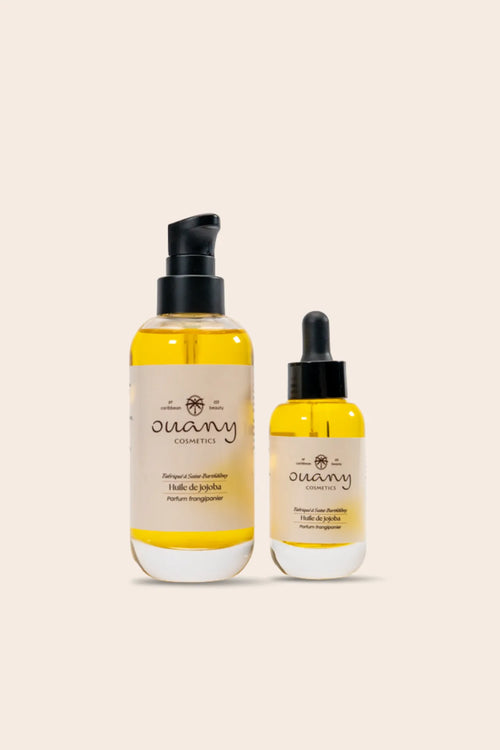
Our Ouany products
Available at our points of sale in St Barts and at our partner hotels, spas and villas.


5. Jojoba oil on the scalp and hair

Scalp
Jojoba oil is frequently used as a pre-shampoo treatment on the scalp, washed out afterward. If you have dandruff, persistent itching, hair loss or any scalp condition, a dermatologist is the right person to see.
Itching and tightness
Mild discomfort can have many causes. If it doesn't go away, don't try to self-treat with oils: get professional advice.
Lengths and ends
A drop or two smoothed over the lengths is a common way to add a little slip and make hair easier to style.
6. External use only
Never swallow it
Jojoba oil is not meant to be ingested: its waxy structure isn't processed by the body like a food oil. It is for external use only.
Massage
Thanks to its fluid, stable texture, jojoba oil is often used for massage. It glides well and doesn't feel sticky.
Blending with other oils
It mixes easily with other plant oils and is often used as a base. Essential oils are potent and not suitable for everyone (pregnancy, children, sensitive skin): ask a health professional before using them.
7. Where people use it on the body
Face
A few drops, on clean, slightly damp skin, as the last step of a routine. Do a patch test first.
Body
On dry areas after the shower. Ouany offers a jojoba oil in a 100 ml bottle, available in our stores in St Barts and at partner hotels, spas and villas.
Hands and feet
A small amount massaged in, often at night, is a simple habit many people like.
8. A versatile, long-lasting oil
Easy to fit into a routine
It can be used on its own, mixed with a cream or added to a hair routine. That versatility makes it easy to keep in a bathroom cabinet.
Long shelf life
Its natural stability means it keeps well when stored away from heat and light.
Sensitive skin
No ingredient suits everyone. Even with an oil known for its gentleness, a patch test is the safest first step.
9. FAQ
Does jojoba oil moisturize skin? An oil doesn't add water to the skin. It is usually applied over damp skin or a moisturizer.
Is it suitable for oily skin? Many people with oily skin like its light texture, but start with a very small amount and see how your skin responds.
Can I use it on my scalp? Yes, typically as a pre-shampoo step. For any scalp condition, see a dermatologist.
Is it anti-aging? No. It can be part of a routine, but it is not an anti-aging active ingredient.
Read next
Read more

Jojoba oil is generally well tolerated, but it isn't risk-free. Allergies, breakouts, irritation and poor product quality can all cause trouble. Here is what to watch for and how to use it more saf...

Jojoba oil has been studied for decades for its waxy, sebum-like composition. Here is what is well established, what is often claimed online, and when a dermatologist's advice matters most.