

Jojoba Oil for Skin Hydration: Benefits and How to Use It
Using jojoba oil to moisturize the skin is a common habit in simple routines. This plant oil is often described as close to human sebum in structure, it is naturally stable, and its light texture makes it easy to add to a daily routine. Here is a look at what causes dehydrated skin, why jojoba oil is so popular for it, how to apply it and which precautions to keep in mind.
Understanding dehydrated skin

Before adding jojoba oil to your routine, it helps to know the main reasons skin loses water and feels uncomfortable.
A weakened skin barrier
When the skin barrier is disrupted, water escapes more easily. The skin can feel tight, look uneven and lose some of its glow.
Too much water loss
Dehydration can affect every skin type, oily skin included. A suitable routine is about limiting evaporation and keeping the skin comfortable.
Exposure to the elements
Wind, sun, pollution and changes in weather all make dehydration worse. Daily protection helps limit their visible effects.
A routine that doesn't suit your skin
Harsh products can leave the skin more fragile and increase water loss. A gentle routine is easier on the skin.
Why jojoba oil is popular for dry, dehydrated skin

Several characteristics explain why jojoba oil shows up in so many moisturizing routines.
A structure often compared to sebum
Jojoba oil is technically a liquid wax, and it is often described as similar to the skin's own sebum. Many people find it absorbs easily and feels comfortable on the skin.
A light film on the surface
Like other plant oils, it leaves a thin layer on the skin. Oils of this kind are used in routines to help limit the evaporation of water from the surface.
Natural stability
Jojoba oil is known for resisting oxidation better than many plant oils, so it keeps well when stored properly.
A texture many skin types enjoy
Its light, fluid texture is appreciated on dry, combination and oily skin alike. As always, how your own skin responds is what counts.
Signs of dehydration people look to address

These are the everyday signs that usually lead people to add an oil to their routine.
Tightness
That uncomfortable, stretched feeling after cleansing is one of the most common signs of dehydrated skin.
Uneven texture
Rough patches can make the skin look less smooth and less even.
Dullness
Dehydrated skin tends to reflect light less evenly, which can make the complexion look tired.
A feeling of dryness
Dryness often goes hand in hand with skin that feels more reactive and less comfortable.
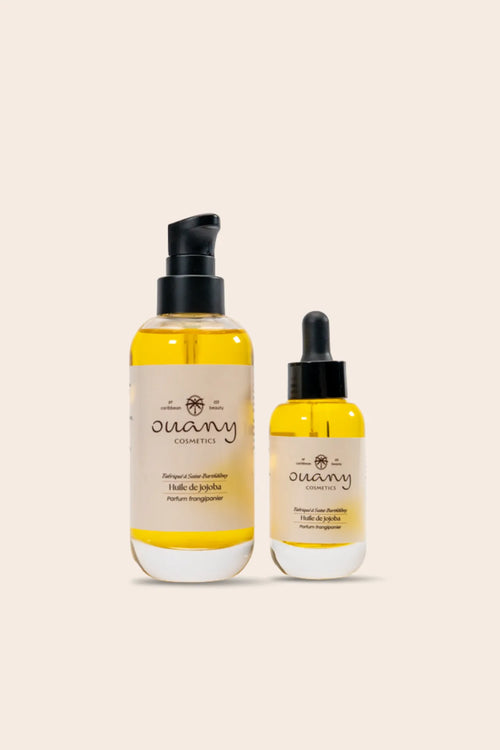
Our Ouany products
Available at our points of sale in St Barts and at our partner hotels, spas and villas.


How to apply jojoba oil

A consistent, simple routine is the easiest way to see whether jojoba oil suits you.
Daily use
A few drops are enough. Warm them between your palms and press them gently onto the face.
A gentle massage
Light, slow movements help spread the oil evenly and make the routine a pleasant moment.
Pairing it with other products
Jojoba oil fits into a minimalist routine or alongside gentle skincare. Many people apply it after a moisturizer, or mix a drop into their cream.
How often to use it
Some people use it morning and night, others only in the evening. Start slowly and adjust to how your skin feels.
What to expect

Every skin is different, so it is worth giving any new step a few weeks and paying attention to how your skin responds.
Comfort
Many people use jojoba oil for the soft, supple feel it leaves on the skin.
A routine that respects the skin barrier
Combined with gentle cleansing and daily protection, a simple oil step is part of a routine designed to be kind to the skin barrier.
Glow
A thin layer of oil reflects light, which gives the skin a fresh, luminous look right after application.
Consistency matters
Whatever you use, regular, gentle habits matter more than any single product.
Precautions and good habits

A few precautions help you add jojoba oil to your routine safely.
Patch test first
Try the oil on a small area of skin to check how you tolerate it, especially if your skin is reactive.
Choose a quality oil
Look for a pure, cold-pressed jojoba oil and check the ingredient list: it should contain only Simmondsia chinensis seed oil.
Keep the routine gentle
Harsh products can weaken the skin. A routine built around gentle steps is easier on dehydrated skin.
Protect your skin every day
Sun protection and shielding your skin from wind and cold remain essential.
If your skin is very dry, cracked, irritated or prone to a skin condition such as eczema, ask a dermatologist for advice before changing your routine.
Key takeaways
Jojoba oil is a light, stable plant oil that many people use in their moisturizing routine. A few drops, applied regularly as part of a gentle routine with daily protection, are all it takes to see whether it suits your skin.
FAQ
Does jojoba oil moisturize the skin?
Strictly speaking, oils don't add water to the skin. Jojoba oil is used to leave a light film on the surface, which is why it is often applied after a water-based moisturizer.
Can I use it on dry skin?
Yes, many people with dry skin include it in their routine. Patch test first and see how your skin responds.
How long before I notice a difference?
It varies from person to person. Give any new step a few weeks of regular use before judging it.
Can I combine it with a moisturizer?
Yes. You can apply it after your moisturizer or mix a drop into it.
Is it suitable for oily, dehydrated skin?
Many people with oily skin appreciate its light texture. Start with one or two drops, and if you are prone to breakouts, ask a dermatologist for advice.
Read next
Read more

Jojoba oil is a light, stable oil that many people add to their anti-aging routine. This guide explains how skin ages, how to use the oil on the face and what you can realistically expect.

Jojoba oil has a reputation for being gentle, light and easy to use on many skin types. Here is a balanced look at why it is so widely used, where its limits lie, how to apply it and when to ask a ...