
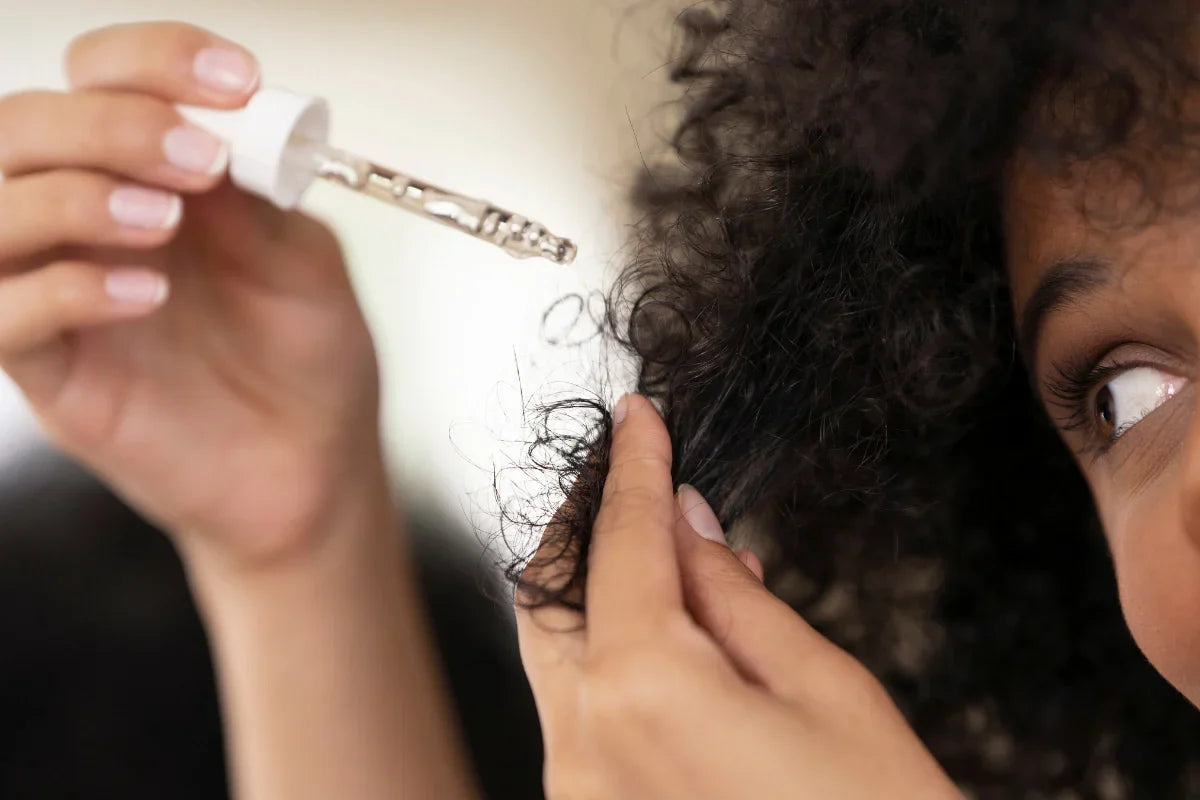
Jojoba Oil for Curly Hair: Benefits and How to Use It
Jojoba oil for curly hair comes up again and again when people look for a way to bring softness, suppleness and definition back to their curls. Curly and coily textures tend to run dry, and jojoba is one of the lightest plant oils around. Its composition is often compared to human sebum, which is why many people with textured hair like the way it spreads through their lengths without a heavy feel. Here is what curly hair actually needs, how jojoba fits into a routine, and what to keep realistic expectations about.
Understanding what curly and coily hair needs

The spiral shape and what it changes
Curly and coily hair grows in a spiral, and that shape affects how it behaves. The strand bends at many points along its length, and each bend is a weaker spot that is more prone to breakage and everyday wear. The spiral also makes it harder for sebum to travel down to the ends, so the lengths tend to feel dry, rough and harder to style.
Why curls get dry and break
Dryness mainly comes from the lack of sebum along the lengths. Textured hair benefits from a regular supply of lipids to stay supple. Without it, the strand becomes more fragile. Wind, heat and pollution add to this, and curls lose their bounce and become harder to define.
Why curls lose definition
Definition depends on how well the hair holds on to moisture. When the lengths are dry, the curl pattern loosens, frizz shows up and the curl loses its movement. That is why curly routines usually layer moisture and oil.
The real needs: moisture, lipids, protection
Curly and coily hair needs a balance between water and oil. Water brings suppleness, while oils help seal it in. Limiting friction, heat and other daily stress matters too. A light oil such as jojoba is often used for the "sealing" step of that balance.
Why jojoba oil is popular for curly hair

A composition often compared to sebum
Technically, jojoba "oil" is a liquid wax made mostly of wax esters, and its composition is regularly compared to that of human sebum, as described in this scientific review of jojoba oil. That resemblance is the main reason it is so widely used in hair and skin care.
A light oil that doesn't weigh curls down
Compared with thicker oils, jojoba has a fluid texture that spreads easily. Used in small amounts, it lets curls keep their lightness and movement, which is why people use it as a finishing touch, in a leave-in routine or as a pre-wash oil treatment.
A light film on the surface of the hair
Like other oils, jojoba leaves a thin film on the hair surface. Many people with curls use it to limit the rough, frizzy feel that comes with friction, sun and wind.
Key components of jojoba

Wax esters
Wax esters make up most of jojoba oil. They give it its fluid, non-greasy texture and its stability, and they are what make it so close to sebum in structure.
Other natural compounds
The review linked above also describes the minor components found in jojoba oil, such as vitamins and other natural compounds, which are part of why cold-pressed jojoba is valued in cosmetics.
Long-chain fatty acids
The wax esters in jojoba are built from long-chain omega-9 fatty acids and alcohols. This is what gives the oil its light, silky slip on the hair.
What to realistically expect on curly hair

Curls that feel softer
Used regularly as part of a moisture-focused routine, oiling the lengths makes curls feel softer and easier to detangle and style.
Less visible frizz and a subtle shine
Oils smooth the surface of the hair, so a few drops can make frizz less visible and add a discreet sheen.
What about the scalp?
Some people massage a little jojoba into the scalp for comfort. If your scalp is itchy, red, flaky or irritated on a lasting basis, see a dermatologist rather than self-treating: these can be signs of a condition that needs proper care.
How to choose a jojoba oil

Ouany jojoba oil
Ouany offers a pure, cold-pressed jojoba oil in a 30 ml bottle, with a fluid texture that is easy to work through curly and coily hair. It is available in our stores in St Barts and at partner hotels, spas and villas.
How to spot a quality oil
A good jojoba oil is golden yellow with a fluid texture. Cold pressing helps preserve its natural components, and a mild, natural scent is another good sign.
Criteria for curly and coily hair
Textured hair usually does better with light oils that spread quickly without leaving a greasy film. Many people prefer an unrefined oil, which keeps more of its natural components.
Our Ouany products
Available at our points of sale in St Barts and at our partner hotels, spas and villas.



How to use jojoba oil on curly hair

Pre-shampoo oil treatment
Apply a few drops to the lengths before washing and leave it on for twenty to thirty minutes. Your shampoo then removes the excess.
As a leave-in finish
After washing, a small amount on the ends helps seal in the moisture from your leave-in or conditioner, so curls hold their shape and feel less frizzy.
Scalp massage
A gentle scalp massage with a drop or two of oil is a pleasant ritual. Keep it light, especially if your scalp tends to get oily.
DIY hair mask
Mixing jojoba with honey or plain yogurt makes a simple homemade mask for dry curls.
Popular blends with other oils

Jojoba + argan
A common pairing for people looking for extra shine and softness on the lengths.
Jojoba + castor oil
Castor oil is much thicker; mixed with jojoba it becomes easier to spread on dense curls.
Jojoba + coconut
A richer blend often used on very dry curls. Coconut can feel heavy on some curl types, so start small.
Common mistakes to avoid
Using too much
Too much oil weighs the lengths down and reduces definition.
Applying oil to bone-dry hair
Oil seals in moisture but doesn't add water. Apply it on damp hair or over a moisturizing product.
Choosing a refined oil
Refined oils lose part of their natural components during processing.
Oiling an oily scalp too often
Frequent application on a scalp that already gets oily can leave it feeling greasy.
Jojoba vs other oils for curly hair
Jojoba vs coconut
Coconut oil is richer and can weigh down finer curls; jojoba feels lighter.
Jojoba vs argan
Argan is prized for shine but has a richer feel than jojoba.
Jojoba vs castor oil
Castor oil is very thick and sticky, while jojoba is fluid and easy to spread.
Suggested routines
Simple routine for beginners
A leave-in conditioner followed by a few drops of jojoba on the ends is enough to start.
Routine for very dry hair
A weekly mask plus a pre-shampoo oil treatment makes the lengths feel more supple.
Anti-frizz routine
Layering water, a moisturizing cream and a little jojoba helps curls keep their definition.
FAQ
Does jojoba oil help define curls?
As part of a moisture-and-oil routine, it helps curls feel softer and hold their shape, but definition depends on your whole routine and styling.
Can I use jojoba on a sensitive scalp?
Jojoba is generally well tolerated, but do a patch test first. If your scalp is irritated or itchy on a lasting basis, see a dermatologist.
How often should I use jojoba oil?
Two to three times a week is a common rhythm; adjust to how dry your hair feels.
Is jojoba suitable for children with curly hair?
For children, ask a pediatrician or dermatologist before using any oil or new hair product.
Should I rinse jojoba oil out?
It depends on how you use it: yes for a pre-shampoo treatment, no when used as a finishing touch.
Read next
Read more

Jojoba oil is one of the most common bases in beard oils, thanks to its light, non-greasy texture. Here is how to apply it, which mistakes to avoid, and what to keep realistic expectations about.
Dull, frayed ends are among the most common hair concerns. Here is why ends get damaged, how jojoba oil is used for shine and softness, and what an oil can and cannot do for split ends.