
Jojoba Oil Contraindications: Who Should Be Careful
Jojoba oil is one of the most widely used natural oils in skin, beard and hair routines. It is often described as close to human sebum in structure, it is naturally stable, and it has a reputation for being gentle. Still, like any cosmetic ingredient, it comes with a few contraindications and situations that call for extra care. Here are the precautions to know before you use it.
1. Possible contraindications of jojoba oil

1.1 Sensitivity or allergy
Even though jojoba oil is known for being gentle, some people can react to it. Redness, stinging or patches can appear, particularly on very reactive skin. If this happens, stop using it.
1.2 Skin in an inflammatory flare-up
During an eczema flare-up or severe dermatitis, the skin can react unpredictably to any product. In these situations, ask a dermatologist before applying anything new.
1.3 Severe inflammatory acne
Jojoba oil is often used on combination or oily skin, but acne is a skin condition that calls for personalized advice. If you have inflammatory acne, ask a dermatologist whether an oil belongs in your routine.
1.4 A very unbalanced scalp
Seborrheic dermatitis and other scalp conditions need proper medical care. An oil does not replace a treatment; ask a dermatologist before using one on an affected scalp.
2. Precautions to avoid reactions

2.1 Patch test first
Apply a small amount to the inside of your elbow and wait to see how your skin reacts. This simple step is especially useful for sensitive skin or if you have a history of allergies.
2.2 Start slowly
Begin with a small amount and see how your skin responds before using it more often.
2.3 Be careful with irritated areas
Avoid applying oil to broken, damaged or inflamed skin without professional advice.
2.4 Dermatological treatments
Some treatments make the skin drier or more sensitive. If you are following a prescribed treatment, ask your dermatologist before adding an oil, and never use it as a replacement.
3. What jojoba oil is generally known for

3.1 A light texture
Jojoba oil has a fluid texture that many people with combination or oily skin find comfortable. Every skin is different, so watch how yours responds.
3.2 Natural stability
It resists oxidation better than many plant oils, so it keeps well when stored away from heat and light.
3.3 External use only
As a cosmetic, jojoba oil is meant to be applied to the skin, beard or hair. Never swallow it, and keep it out of reach of children.
3.4 A reputation for being gentle
It is generally considered a gentle oil, but "gentle" is never a guarantee: a patch test remains the best way to check your own tolerance.
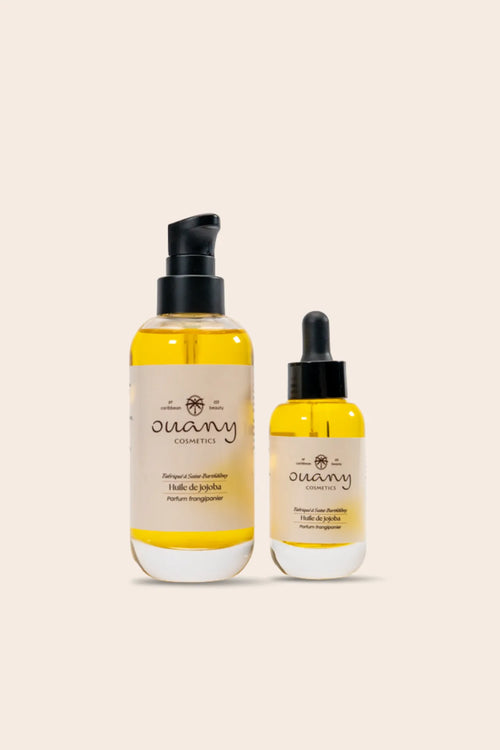
Our Ouany products
Available at our points of sale in St Barts and at our partner hotels, spas and villas.


4. Who should be more careful

4.1 Very sensitive skin
Reactive skin should always start with a patch test and a small amount.
4.2 People on a dermatological treatment
Some treatments change how the skin tolerates products. Check with your dermatologist first.
4.3 People with a scalp condition
In case of significant seborrheic dermatitis or another scalp condition, ask a dermatologist before using an oil.
4.4 Advanced inflammatory acne
Acne needs a personalized approach. A dermatologist can tell you which products suit your skin.
The same applies during pregnancy, for babies and young children, or on damaged skin: ask a doctor or dermatologist before using a new product.
5. How to use jojoba oil safely

5.1 Choose a pure, quality oil
Look for a pure jojoba oil, with only Simmondsia chinensis seed oil on the label, and store it properly.
5.2 Add it gradually
Introducing it slowly lets you see how your skin responds and spot any reaction early.
5.3 Adapt it to your skin
Every skin has its own needs. The oil can be used on its own or alongside your usual products.
5.4 Watch for reactions
Skin that feels tight, hot or turns red may be signaling a sensitivity. Stop using the oil and, if the reaction persists, see a doctor or dermatologist.
Jojoba oil is a popular, versatile oil for skin, beard and hair, and you can read more in our guide to using jojoba oil to moisturize the skin. Knowing when to be careful lets you use it with confidence.
Key takeaways
Jojoba oil has a reputation for being gentle, but reactions are possible. Patch test first, start slowly, avoid broken or inflamed skin, and ask a dermatologist if you have a skin or scalp condition, follow a treatment, are pregnant, or want to use it on a child.
FAQ
Can jojoba oil cause allergies?
Allergic reactions are possible. A patch test lets you check your tolerance before regular use.
Is it suitable for sensitive skin?
It is generally considered gentle, but very reactive skin should start slowly, after a patch test.
Can I use it on acne-prone skin?
Many people with combination or oily skin use it, but if you have acne, ask a dermatologist for advice.
Does jojoba oil clog pores?
It is often chosen for its light texture, but every skin responds differently. Start with a small amount and watch how your skin reacts.
Should I avoid it during a dermatological treatment?
Ask your dermatologist first, since some treatments make the skin more sensitive.
Read next
Read more

Jojoba oil has quietly become a staple of men's grooming. Here is why its light texture and versatility appeal to so many men, and how to use it on the skin, the beard and after shaving.
Jojoba oil is generally well tolerated, but some skin can still react to it. Learn how to do a reliable patch test, spot the signs of intolerance and know what to do if your skin says no.