

Aloe Vera for Sunburn and Minor Burns: Safe Use Guide
Aloe vera is one of the plant ingredients people reach for most often after too much sun or a minor burn. Its reputation comes from a long history of traditional use and from its gel, which is rich in water and feels fresh on warm skin. But what can you really expect from it? When is it appropriate, and when is it not? How should you apply it, and which precautions matter most?
Here's a practical, safety-first guide to using aloe vera on sunburn and minor burns, and knowing when to see a doctor instead.
Why aloe vera is linked to sunburn and burns

Aloe vera gel, taken from the inner leaf, contains:
polysaccharides
vitamins A, C and E
minerals
amino acids
antioxidants
enzymes
This makeup, together with centuries of traditional use, explains why aloe vera is so closely associated with sun care. Popularity is not proof, though: for a real burn, medical advice comes first.
A fresh, watery texture
Skin that has had too much sun feels warm and tight. The cool, watery texture of aloe vera gel is what most people appreciate at that moment. You can read more in our guide on how to use aloe vera gel daily.
A light layer
The gel spreads easily without rubbing and leaves no greasy film, which makes it pleasant on sensitive, sun-warmed skin.
A cool sensation
The gel feels fresh as soon as it's applied, which is why it's so popular after time in the sun.
When people use aloe vera

Mild sunburn
Redness, warmth and tightness after a day outdoors: this is the situation where most people reach for an aloe vera gel. If the sunburn is extensive, blisters or comes with fever, chills or nausea, see a doctor.
Very minor everyday burns
A small, superficial kitchen burn on intact skin. When in doubt, a pharmacist or doctor can advise you.
After waxing
Some people like the fresh feel of aloe vera gel on skin that feels warm after hair removal, as long as the skin isn't broken.
When aloe vera is not the answer

Serious burns (deep second-degree or third-degree)
Large blisters, or skin that looks white, black or charred: this is a medical emergency.
Infected burns
Spreading redness, pus or fever: see a doctor.
Chemical or electrical burns
These always require medical care.
Babies and young children
A burn or sunburn on a baby or young child should be checked by a doctor or pharmacist before applying any product.
How to apply aloe vera after too much sun

Step 1: cool the skin first
Standard first-aid advice is to cool a minor burn under cool, not icy, running water. Never put ice directly on the skin.
Step 2: apply a fragrance-free aloe vera gel
Choose a simple formula with a fresh texture and no added fragrance, on intact skin only.
Step 3: spread it very gently
Just enough to cover the area. No firm massage on sun-warmed skin.
Step 4: reapply as needed
If the skin is comfortable with it, you can reapply during the day. Stop if you notice any stinging or irritation.
Step 5: stay out of the sun
Keep the area covered and protected while it recovers.
Our Ouany products
Available at our points of sale in St Barts and at our partner hotels, spas and villas.



How long does it take?
Every sunburn is different. Mild sunburn usually settles on its own over a few days. If it gets worse, blisters, covers a large area or you feel unwell, see a doctor rather than waiting.
Ingredients often paired with aloe vera in after-sun care
Aloe vera + panthenol (provitamin B5)
A classic pairing in after-sun formulas.
Aloe vera + calendula
A traditional plant often found in gentle skincare.
Aloe vera + chamomile
Frequently used in formulas for sensitive skin.
Aloe vera + thermal spring water
A common base for fresh, light after-sun mists and gels.
Mistakes to avoid
Skipping the cooling step
Cool the skin with water first.
Using a fragranced gel
Fragrance can sting sensitive, sun-warmed skin.
Going back into the sun
Sun-damaged skin needs time and protection. Exposure can also leave dark marks.
Popping blisters
This raises the risk of infection. Blistering burns should be seen by a doctor or pharmacist.
Applying it to broken skin
Aloe vera gel is a cosmetic for intact skin only.
FAQ
Does aloe vera heal burns? No cosmetic heals a burn. Aloe vera gel is valued for its fresh feel on mild sunburn, and any serious burn needs medical care.
Is it suitable for sunburn? It's one of the most popular choices after too much sun, thanks to its cool texture. See a doctor if the sunburn is severe.
Can you use it on children? For babies and children, ask a doctor or pharmacist before applying any product to a burn or sunburn.
Should you apply it several times a day? You can reapply as needed if your skin is comfortable with it.
Can you use it on a blistered burn? No. A blistering burn should be seen by a doctor or pharmacist, and blisters should never be popped.
The bottom line
Aloe vera gel is a favorite after too much sun for its fresh, watery texture. It belongs on mild sunburn and intact skin only, after cooling the area with water, and it never replaces medical care for serious, blistering or infected burns. The best approach remains prevention: shade, covering up and sunscreen. A light, fresh ingredient that fits naturally into a Caribbean summer routine and the Ouany world.
Read next
Read more
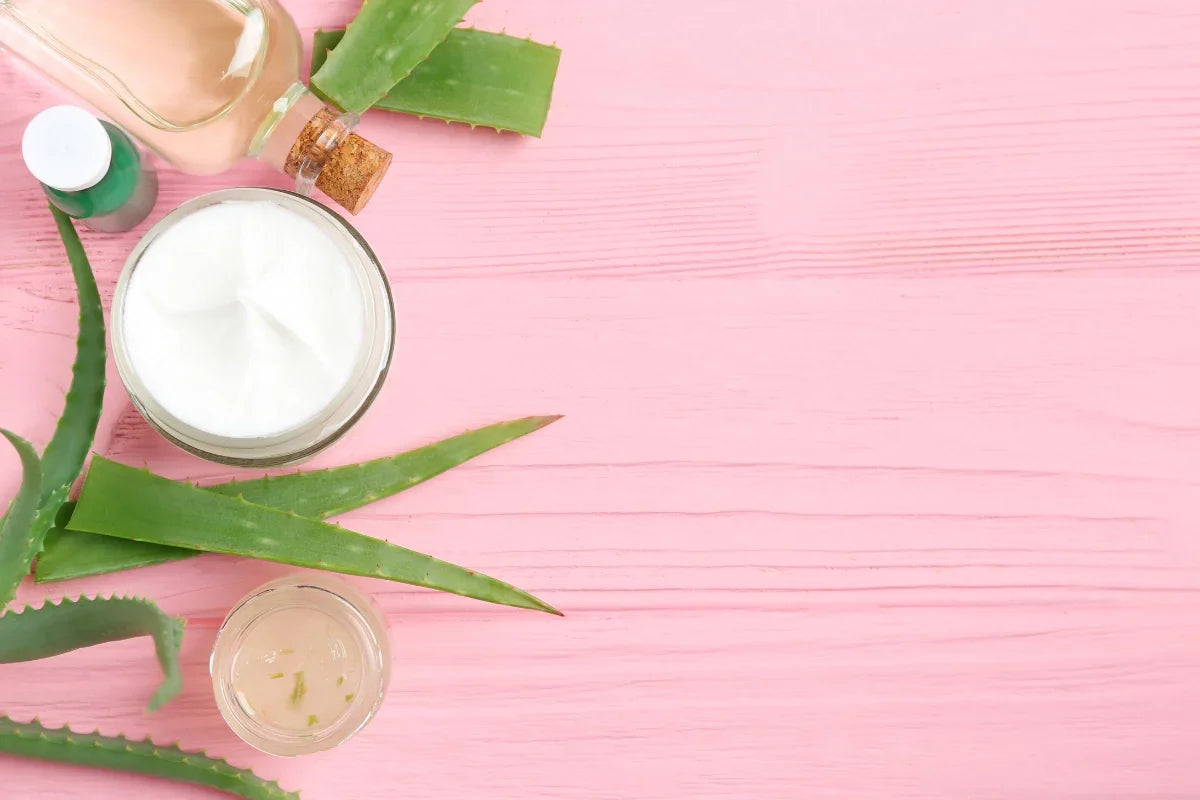
Gel, serum or cream: each aloe vera format has its own texture and use. This comparison helps you pick the one that fits your skin and your routine.

Chocolate, vanilla and caramel body washes turn an everyday shower into a small treat. Here is how gourmand scents are built, what goes into these creamy formulas and how to pick the right one for ...