
Sulfate-Free Shampoo: Pros, Cons and Who It's For
Sulfate-free shampoos have changed the way many people wash their hair. Once reserved for fragile or color-treated hair, they now appeal to a much wider audience looking to keep the scalp balanced and the hair fiber in good shape. Their reputation rests on a simple promise: cleaning without stripping. But does that promise hold for every hair type? And what are the limits of these gentler formulas?
Here is a complete look at the pros and cons of sulfate-free shampoo, and who it suits best.
1. What is a sulfate-free shampoo?

What surfactants do
Surfactants are the cleansing agents that make shampoo lather and remove dirt and oil. Sulfates such as SLS (sodium lauryl sulfate) and SLES (sodium laureth sulfate) are the strongest and most widely used in classic formulas.
Why some surfactants are considered harsh
Their strong cleansing power can strip the scalp's natural protective film, which may lead to dryness, irritation or weaker hair, especially on sensitive heads.
The gentle alternatives in sulfate-free shampoos
Sulfate-free formulas use surfactants derived from sugars, amino acids or coconut. They lather less but are gentler on the scalp's natural balance.
2. Why are sulfates controversial?

Cleansing power that can be too strong
Sulfates remove sebum very effectively, but also the natural oils that help protect the scalp and lengths.
Possible irritation on sensitive scalps
People prone to itching or redness may react to sulfates. If you have a scalp condition such as dermatitis or eczema, ask a dermatologist which products suit you.
An effect on hair color
Sulfates can wash out artificial pigments faster, so color-treated hair may lose its vibrancy sooner.
3. The benefits of sulfate-free shampoo

A gentler, more respectful cleanse
Mild surfactants are less likely to strip the scalp's protective film. Many people find their scalp feels more comfortable, less dry and less tight.
Better moisture for the lengths
Dry, curly or coily hair holds on to moisture more easily when its protective layer isn't stripped away. Curls often feel softer and look more defined.
Better care for color-treated hair
With a gentler cleanse, pigments tend to stay in the hair longer, so color keeps its shine and depth.
A routine suited to sensitive scalps
Sulfate-free formulas are often made with comforting ingredients such as aloe vera, glycerin or calendula, and are popular with people who have sensitive or reactive scalps.
4. The limits of sulfate-free shampoo

Less lather
Mild surfactants foam less. That can be surprising at first, but it doesn't mean the hair is less clean. You simply need to massage a little longer.
An adjustment period
The scalp may take a few washes to adjust. At first, hair can feel heavier or less clean than usual.
Variable results in hard water
Hard water makes mild surfactants less effective. The wash may feel less thorough, especially if you use a lot of styling products.
Possible buildup
Sulfate-free shampoos are less effective at removing silicones, waxes and heavy oils. With the wrong routine, hair can end up feeling coated or sticky.
Nos soins Ouany
Disponibles dans nos points de vente à Saint-Barthélemy et chez nos hôtels, spas et villas partenaires.



5. Which hair types benefit most from sulfate-free?

Dry, curly or coily hair
This hair is naturally more porous and benefits from the gentleness of sulfate-free surfactants. Curls often feel softer, less frizzy and better defined.
Color-treated hair
Pigments tend to stay in the hair longer, so tones fade more slowly.
Sensitive scalps
Gentle formulas are often better tolerated by scalps prone to itching or discomfort. Persistent symptoms should be checked by a dermatologist.
Fine, fragile hair
Harsh sulfates can make fragile hair more prone to breakage. Sulfate-free formulas are gentler on the fiber.
6. When sulfate-free isn't always the best fit

Very oily hair
Mild surfactants may not be strong enough to remove excess oil. Alternating with a clarifying shampoo can help.
Heavy silicone or styling product users
Residue builds up more easily. Using a clarifying shampoo from time to time is a good idea.
People who sweat a lot
Athletes and anyone spending a lot of time in the heat may occasionally need a deeper cleanse.
7. How to choose a sulfate-free shampoo
Look for mild surfactants
Ingredients to look for include coco-glucoside, decyl glucoside, sodium cocoyl isethionate and sodium lauroyl sarcosinate.
Check the pH
A slightly acidic pH is gentler on the hair fiber and the scalp.
Pick a formula for your hair type
Moisturizing, clarifying, comforting or color-care: there is a formula for every need.
Read the INCI list
A short, readable and coherent ingredient list is often a good sign.
8. How to switch to sulfate-free
Accept a lighter lather
Foam is not a sign of how well a shampoo cleans. Mild surfactants simply work differently.
Massage a little longer
Spending a bit more time massaging the scalp helps the cleansing agents do their job.
Rinse thoroughly
Careful rinsing prevents residue and gives a better result.
Use a clarifying shampoo occasionally
From time to time, a clarifying wash removes silicone and styling product buildup.
9. Is sulfate-free shampoo right for you?
A great option for fragile hair
If your hair is dry, color-treated, curly or sensitized, sulfate-free shampoo is worth trying.
Gentle, but not for everyone
Very oily hair or silicone-heavy routines sometimes need an extra step.
A choice that depends on your whole routine
Sulfate-free shampoo works best as part of a coherent routine: suitable conditioners, lightweight products and careful rinsing.
FAQ
Does sulfate-free shampoo clean as well as regular shampoo?
It cleans well, but differently. Mild surfactants lather less and need a longer massage to lift dirt and oil. The experience is less foamy than with a traditional shampoo.
Why does my sulfate-free shampoo barely lather?
Because it doesn't contain sulfates, which are the foamiest cleansing agents. Lather is not a sign of cleanliness, and gentle formulas still clean with a light foam.
How long does the switch to sulfate-free take?
It usually takes a few washes for the scalp to adjust. During that time, hair can feel heavier or less clean, which is normal.
Is sulfate-free shampoo good for oily hair?
Not always. Mild surfactants may not remove excess oil well enough. Very oily hair may need a clarifying shampoo in rotation.
Is sulfate-free shampoo better for color-treated hair?
Generally, yes. Sulfates tend to wash out pigments faster, so sulfate-free formulas help color keep its shine for longer.
Can I use sulfate-free shampoo after a keratin treatment?
Yes, it is often recommended. Sulfates can shorten the life of smoothing or keratin treatments, so hair professionals usually suggest sulfate-free shampoo afterward.
Is sulfate-free shampoo suitable for children or sensitive scalps?
Mild surfactants are often better tolerated by sensitive scalps. For children and babies, choose a product specifically formulated for them, and ask a pediatrician or pharmacist if you have any doubt.
Should I avoid silicones if I use sulfate-free shampoo?
It's a good idea. Non-soluble silicones build up more easily when the shampoo is gentle, which can leave hair heavy or sticky. A clarifying shampoo used occasionally can help if you use rich styling products.
Is sulfate-free shampoo more natural?
Not necessarily. Being sulfate-free doesn't make a formula natural, and some sulfate-free shampoos contain synthetic ingredients. Check the INCI list to see what is really inside.
How can I get the most out of a sulfate-free shampoo?
Massage longer, rinse carefully and avoid very heavy, occlusive products. An occasional clarifying wash also helps keep your routine balanced.
À lire aussi
En lire plus
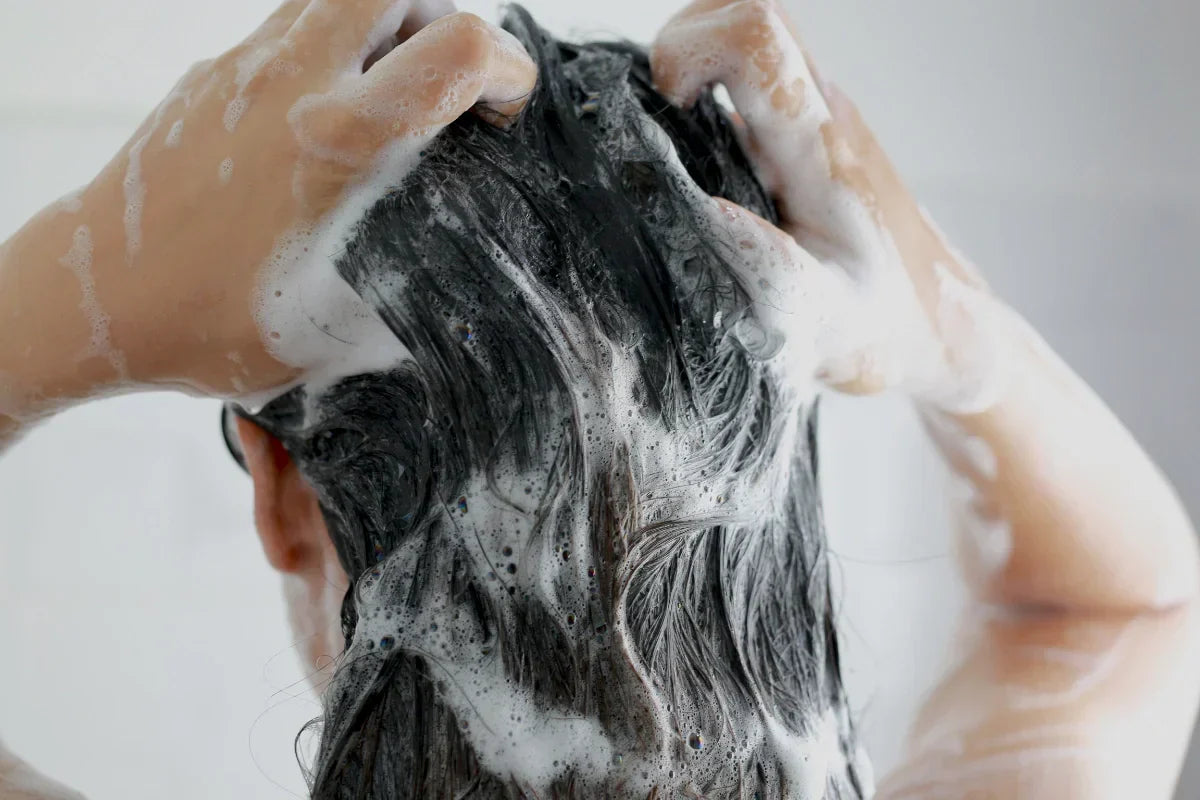
The right shampoo depends on your hair type and your scalp. Learn how to identify your needs, which ingredients to look for or avoid, and how to read a shampoo label.

Organic shampoos rely on plant-based surfactants and botanical ingredients. Discover their benefits, their limits, how they compare with conventional shampoos and how to choose one.