
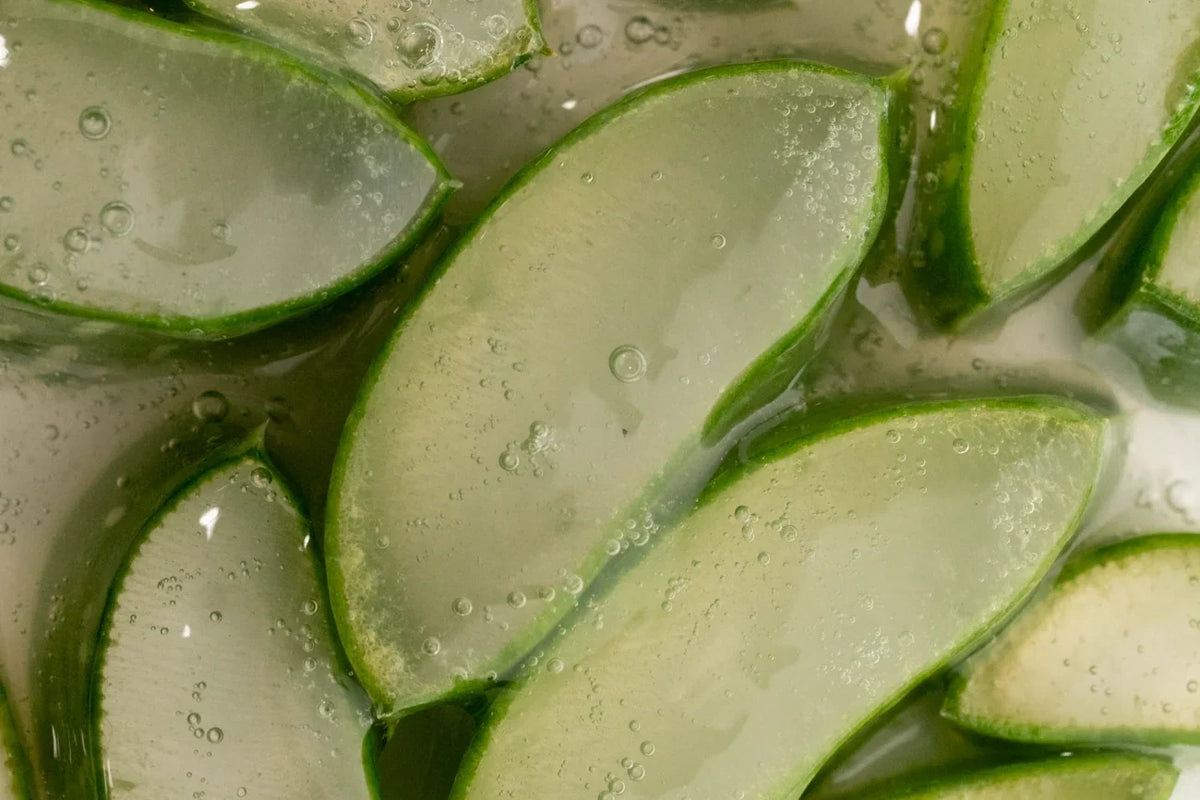
Aloe Vera and Immunity: Hype vs. Evidence
Aloe vera and immunity is a popular search topic, and the plant is often presented online as a natural way to support the body's defenses. The gel inside the leaf contains polysaccharides such as acemannan, antioxidant compounds and other molecules that researchers study for a possible link with the immune response. This guide sorts out the mechanisms being explored, the different forms of aloe, what the evidence shows, its limits and the precautions that matter.
Important: this page describes research on the aloe plant. It is not health advice and does not recommend swallowing any aloe product. Aloe vera cosmetics, such as gels and lotions, are made for use on the skin only and must never be ingested. For any question about your immune health, talk to a doctor or pharmacist.
How aloe vera might interact with the immune system

The interest in aloe vera and immunity comes from several families of molecules found in the plant. Researchers look at how they might interact with immune cells, with oxidative stress and with inflammation. These are research questions, not established effects.
Polysaccharides and immune cells
Aloe polysaccharides, acemannan in particular, are studied for possible interactions with immune cells such as macrophages and natural killer (NK) cells, and with the signaling molecules (cytokines) they release. Most of this work has been done in laboratory settings.
Antioxidant compounds
Aloe vera contains polyphenols and antioxidant vitamins. Researchers examine how these compounds behave toward free radicals, the unstable molecules involved in oxidative stress.
Inflammation
Some aloe compounds are studied for how they might relate to inflammatory processes. Scientists want to understand whether they could play a role in the balance between an effective defense and excessive inflammation.
The skin barrier and topical use
On the skin, aloe vera gel is mostly valued for its fresh, light texture. The skin and mucous membranes act as a physical first line of defense, but applying a gel to the skin is not a way to influence the immune system as a whole.
Forms of aloe vera and what each one is for

Aloe comes in very different forms: skin gels, drinks, concentrated extracts and supplements. Their composition, purpose and safety profile are not the same, which is why they should never be confused.
Pure gel for the skin
Aloe gel is designed to be applied to the skin. Applied this way, it is not expected to have any effect on immunity throughout the body.
Aloe drinks
Aloe drinks are a separate product category, regulated as food. Their quality varies widely, and the presence of aloin, a compound found in the leaf latex, is a key safety concern. Whether such a product is appropriate for you is a question for a healthcare professional.
Standardized extracts and supplements
Some supplements contain extracts standardized for acemannan content. Their quality depends heavily on the manufacturer, and taking them should be discussed with a doctor or pharmacist, especially if you are on medication.
Aloe vera cosmetics
Aloe vera skincare products are cosmetics. They are made for the skin, they are not designed to support immunity and they never replace a medical treatment.
Nos soins Ouany
Disponibles dans nos points de vente à Saint-Barthélemy et chez nos hôtels, spas et villas partenaires.



What the evidence shows and its limits

Research on aloe vera and immunity includes lab studies, animal studies and a small number of human trials. Results are mixed, and the quality of the evidence remains limited.
Lab (in vitro) studies
Lab studies look at how aloe compounds interact with immune cells and cytokines. What happens in a petri dish often does not reflect what happens in the human body, so these results should not be over-interpreted.
Animal studies
Animal models help researchers explore mechanisms. Metabolic differences between species make it hard to apply these findings to people.
Human trials
The few human trials available vary in size and methodology. Larger, well-designed studies would be needed before any conclusion could be drawn.
Methodological limits
Aloe extracts are rarely standardized, products vary from one study to another and conflicts of interest sometimes complicate interpretation. Randomized, double-blind, multicenter trials are the kind of evidence that is still missing.
Choosing and using aloe products responsibly

Because the evidence is limited, the most useful guidance is about product quality and safety rather than dosage.
Look for aloin-free products
Aloin, found in the latex just under the leaf skin, has laxative effects. For skincare, choose products with a clear ingredient list and follow the directions on the label.
Why this page gives no dosage
Oral aloe products are not cosmetics, and their use is a medical question. This guide does not recommend any amount. A doctor or pharmacist is the right person to ask.
Supplements are a medical decision
Extract concentrations vary between products. Before taking any supplement, talk to a healthcare professional, particularly if you already take medication.
The bigger picture
Balanced meals, enough sleep, regular physical activity and stress management are the everyday habits usually associated with good health. Aloe vera is not a substitute for vaccines or prescribed treatments.
Precautions, contraindications and interactions
Aloe vera is not suitable for everyone. Some situations call for medical advice before using any aloe product.
Pregnancy and breastfeeding
Swallowing aloe is generally advised against during pregnancy because of the laxative compounds it can contain. For any skincare question during pregnancy, ask your doctor or midwife.
Immunosuppressive treatments
Interactions between aloe and immunosuppressive drugs are poorly documented. Anyone on this kind of treatment should talk to their doctor before using any oral aloe product.
Digestive conditions
People with inflammatory bowel conditions should avoid oral aloe products, which can have laxative or irritating effects. Medical advice is recommended.
Possible drug interactions
Aloe may change how some medications are absorbed. Blood thinners and blood sugar-lowering drugs deserve particular attention. Tell your pharmacist about any aloe product you use.
FAQ
Can aloe vera really boost immunity?
Aloe vera contains polysaccharides and antioxidant compounds that researchers study for possible interactions with immune cells. Most of this work comes from lab and animal studies, and human evidence remains limited and inconsistent. Aloe vera is not a substitute for medical treatment or public health measures.
Which form of aloe vera is studied for immunity?
Research mostly looks at oral preparations and extracts standardized for acemannan, not at skin gels. Oral products are not cosmetics, and whether to use one is a question for a healthcare professional. Aloe gels and lotions are made for the skin only.
How much aloe vera should I take per day for immunity?
This guide does not recommend any dose. Oral aloe products raise safety questions, including the presence of aloin and possible drug interactions. Ask a doctor or pharmacist before considering one.
Does aloe vera carry health risks?
Oral aloe products can have laxative effects if they contain aloin, and some people react to aloe on the skin. Oral use is advised against during pregnancy and for young children, and drug interactions are possible. Talk to your doctor if in doubt.
Can aloe vera be combined with vaccines or antiviral treatments?
There is no solid evidence that aloe vera interferes with vaccines. Because it is studied for possible effects on immune responses, it is best to talk to a healthcare professional before combining any aloe product with antiviral treatment or a specific medical protocol.
À découvrir chez Ouany : notre gel après-soleil à l'aloe vera bio.
À lire aussi
En lire plus
How to pick the best moisturizing body wash: the criteria that matter, key ingredients such as glycerin, ceramides and plant oils, and the main types of formulas. Plus current trends and tips to fi...

Aloe vera is often promoted for digestion. This guide covers the mechanisms researchers explore, the different forms of aloe, the limits of clinical evidence and the precautions to know. It is not ...